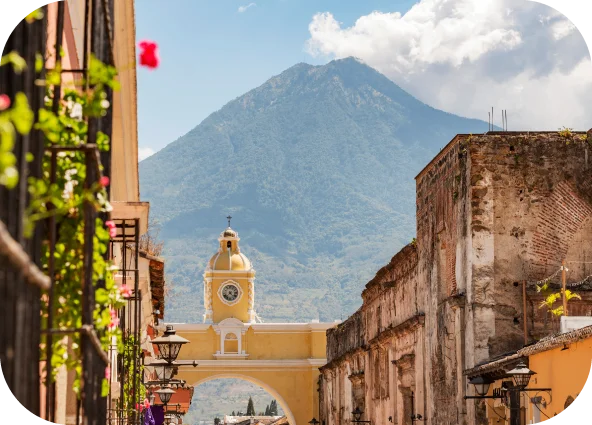
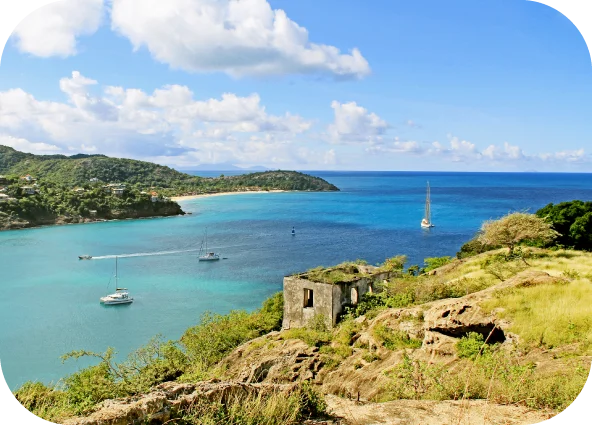
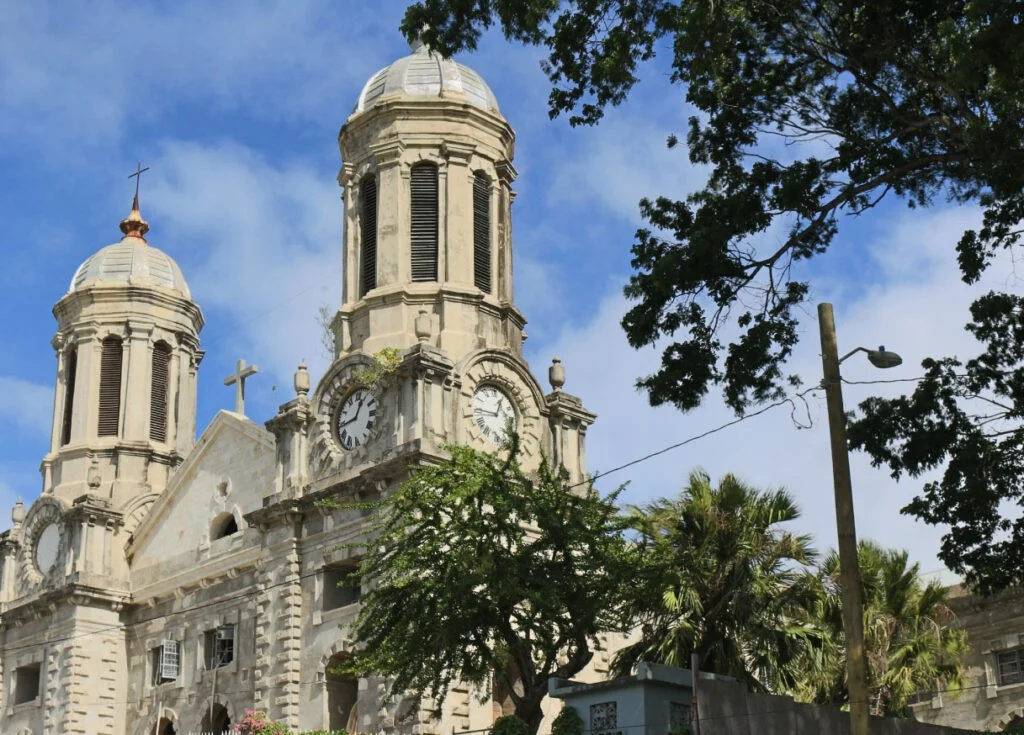
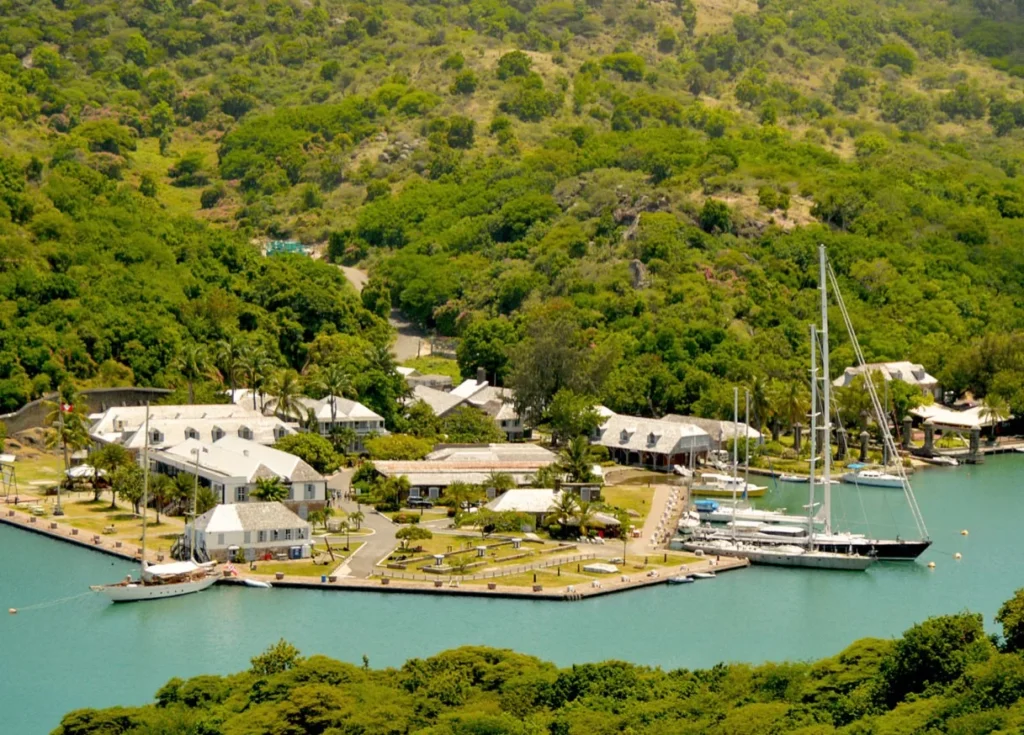
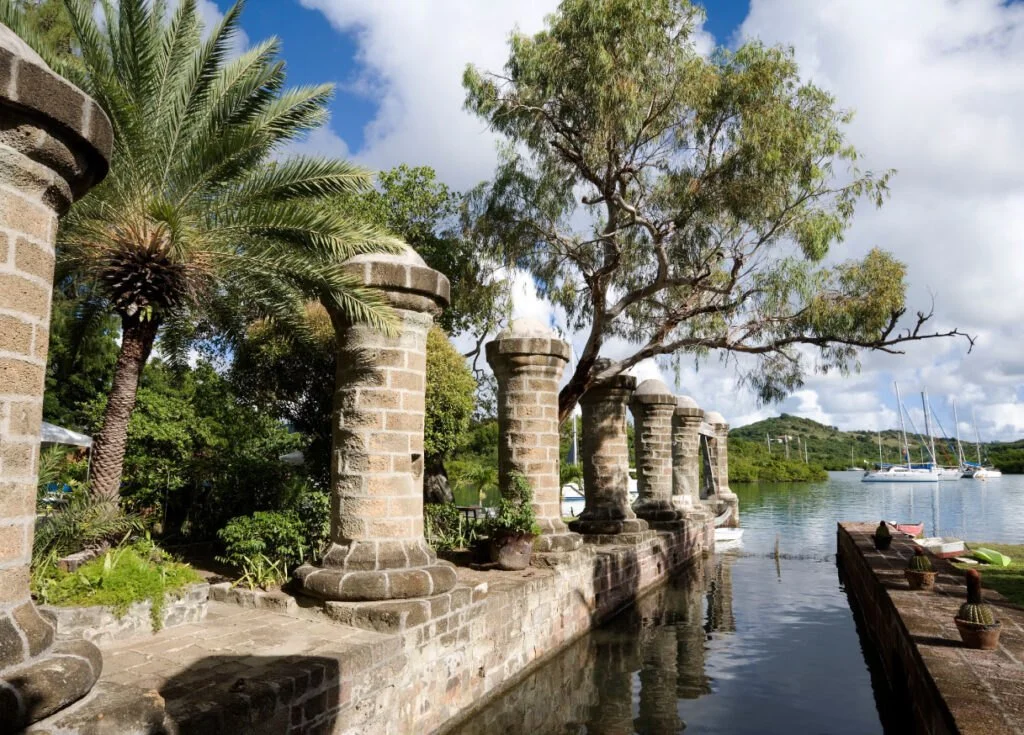
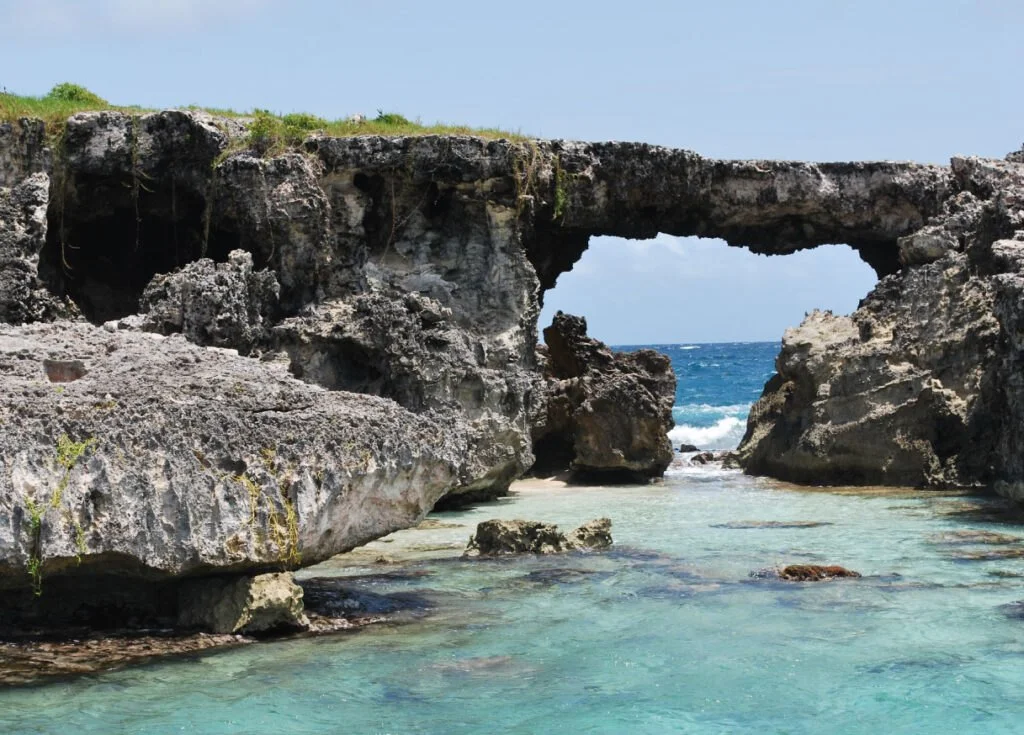
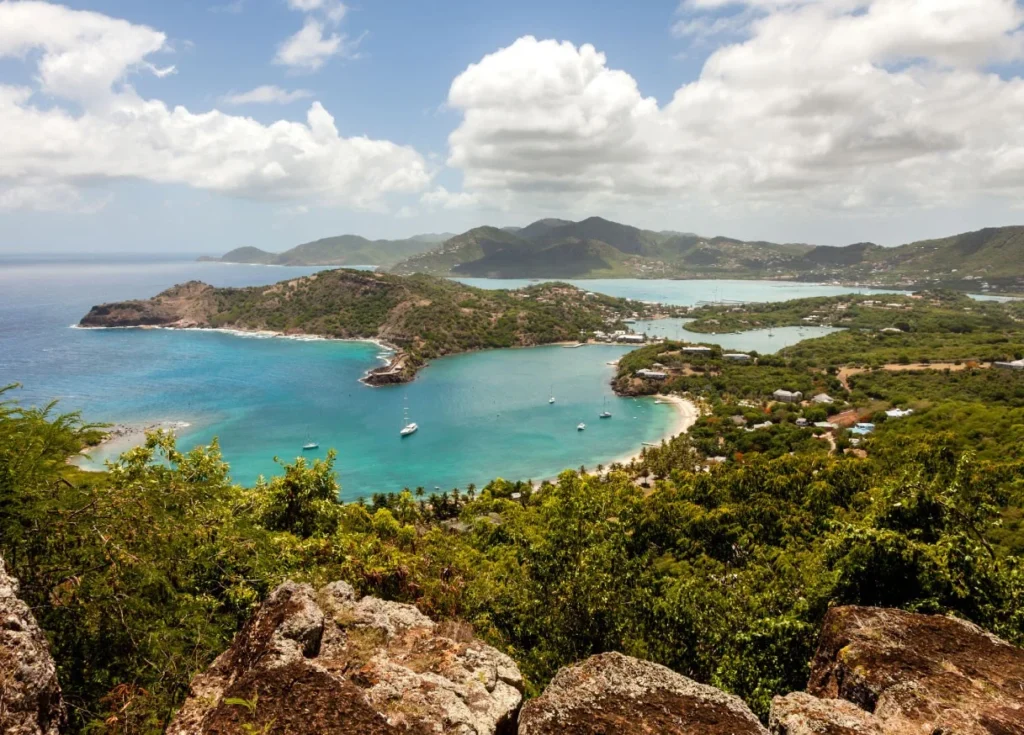
A former British colony, Antigua is no stranger to the Caribbean’s beaches and historical landmarks. It is home to a vibrant culture of unique cuisine, calypso and soca music, cricket and an August carnival that celebrates emancipation from slavery.
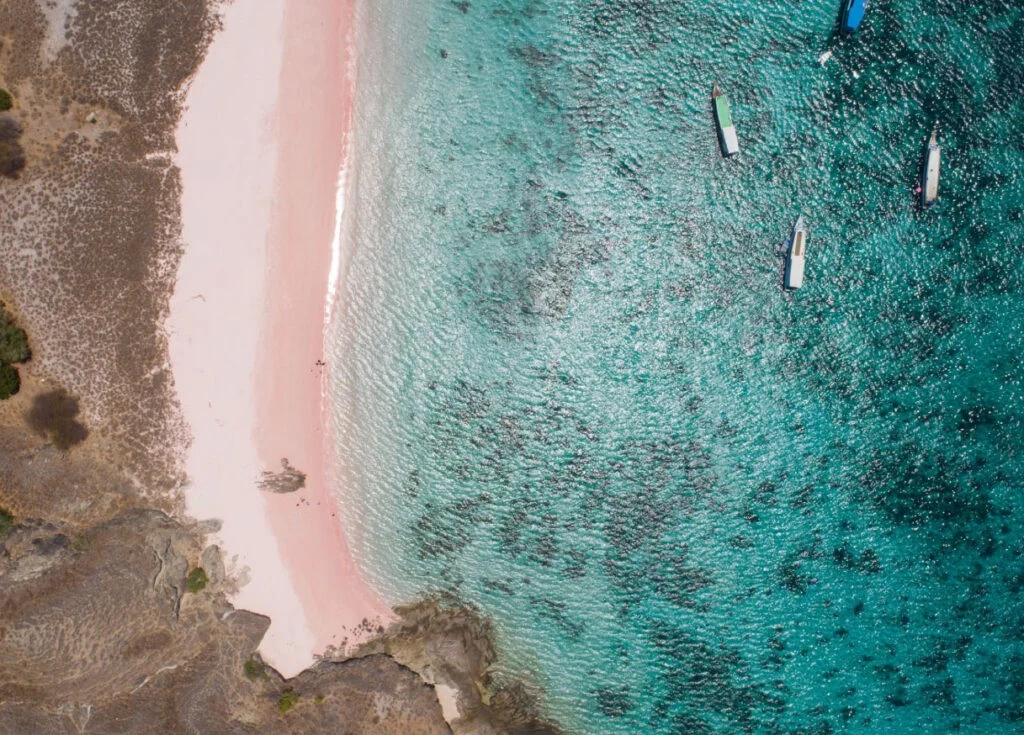
Antigua and Barbuda are known for their combined 365 pink and white sandy beaches, but the islands are also unique for their lack of rivers and lakes with the main source of freshwater being the average annual rainfall of 1,000mm.
Barbuda’s population continues its long-standing traditions of fishing and small-scale farming, as well as being home to undisturbed beaches, and lagoons home to one of the world’s largest colonies of Frigate Birds.
The Redonda Ecosystem Reserve, includes the uninhabited dependency of Redonda and its surrounding ecosystems of seagrass meadows and reefs, covering 74,000 acres. The small, uninhabited rocky island is now a protected nature reserve with migrating birds and endemic lizards, having recently been the target of ecological restoration efforts by the government and residents.
Fig Tree Drive is an 8km route through Antigua’s most fertile land showcasing the farming of mangoes, breadfruit, bananas and pineapples. The highest point on the islands is Boggy Peak at 405 metres that was temporarily renamed Mount Obama between 2009 and 2016 to celebrate the election of Barack Obama as the first black president of the United States.
Let’s get started!
Please complete the form with the details and one of our representatives will get in touch with you shortly.